Never played
You can hold a guitar, but chords, tuning, and strumming are still unfamiliar.
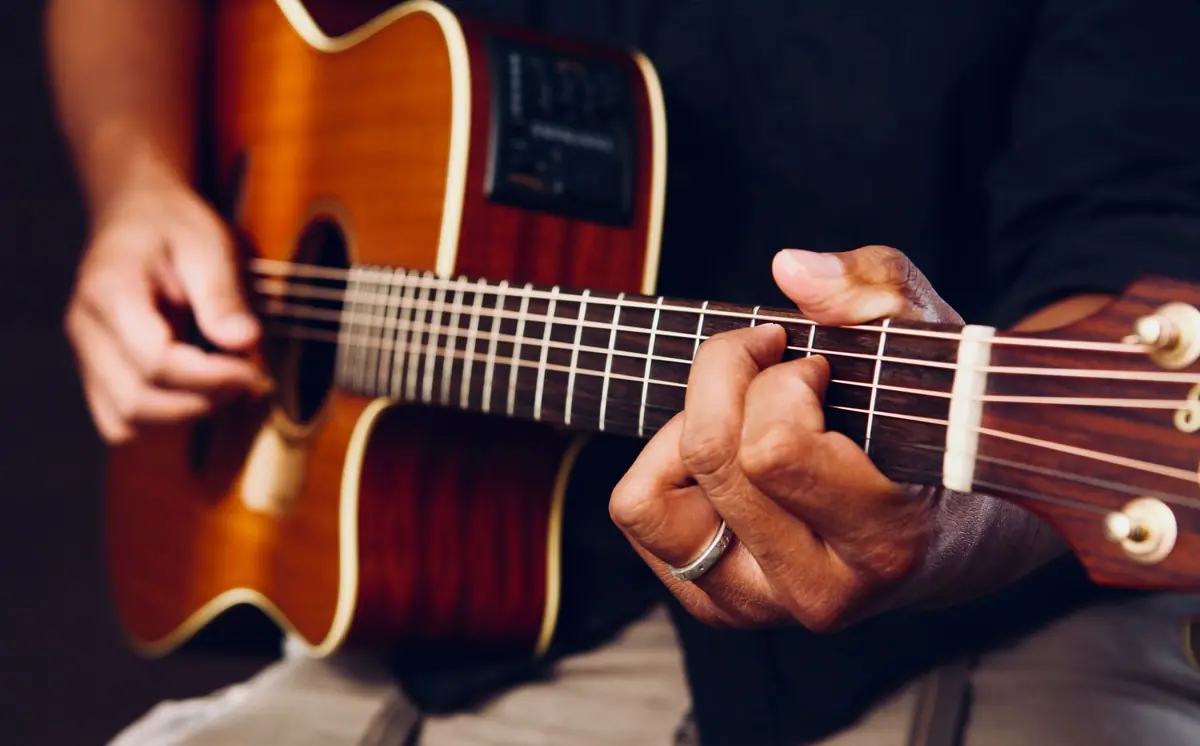
First lessons are about the instrument in your hands: how it sits, how it tunes, and how a chord becomes a sound you can repeat.
A beginner guitar lesson is for someone who is new to the instrument or who tried once and stalled on the first chord. The work is physical before it is theoretical. Buzz, sore fingertips, and a strum that rushes are normal, and they have specific causes.
You do not need to read standard notation to start. Chord diagrams and a slow count are enough. If you already know a little, say so. A first lesson should not repeat a tutorial you have already finished.
These are individual lessons, not a recorded series. Read how private guitar lessons set the pace, or compare an acoustic start with electric guitar lessons if you have not chosen an instrument.
Fit
You can hold a guitar, but chords, tuning, and strumming are still unfamiliar.
You learned two chords from a video and the change between them never got clean.
You are not sure whether to buy acoustic or electric, and you do not want a speech that assumes you already own one.
The student is a child or teen. You, the adult, send the inquiry. Start with the notes on guitar lessons for kids if age and attention are the real question.
In the lesson
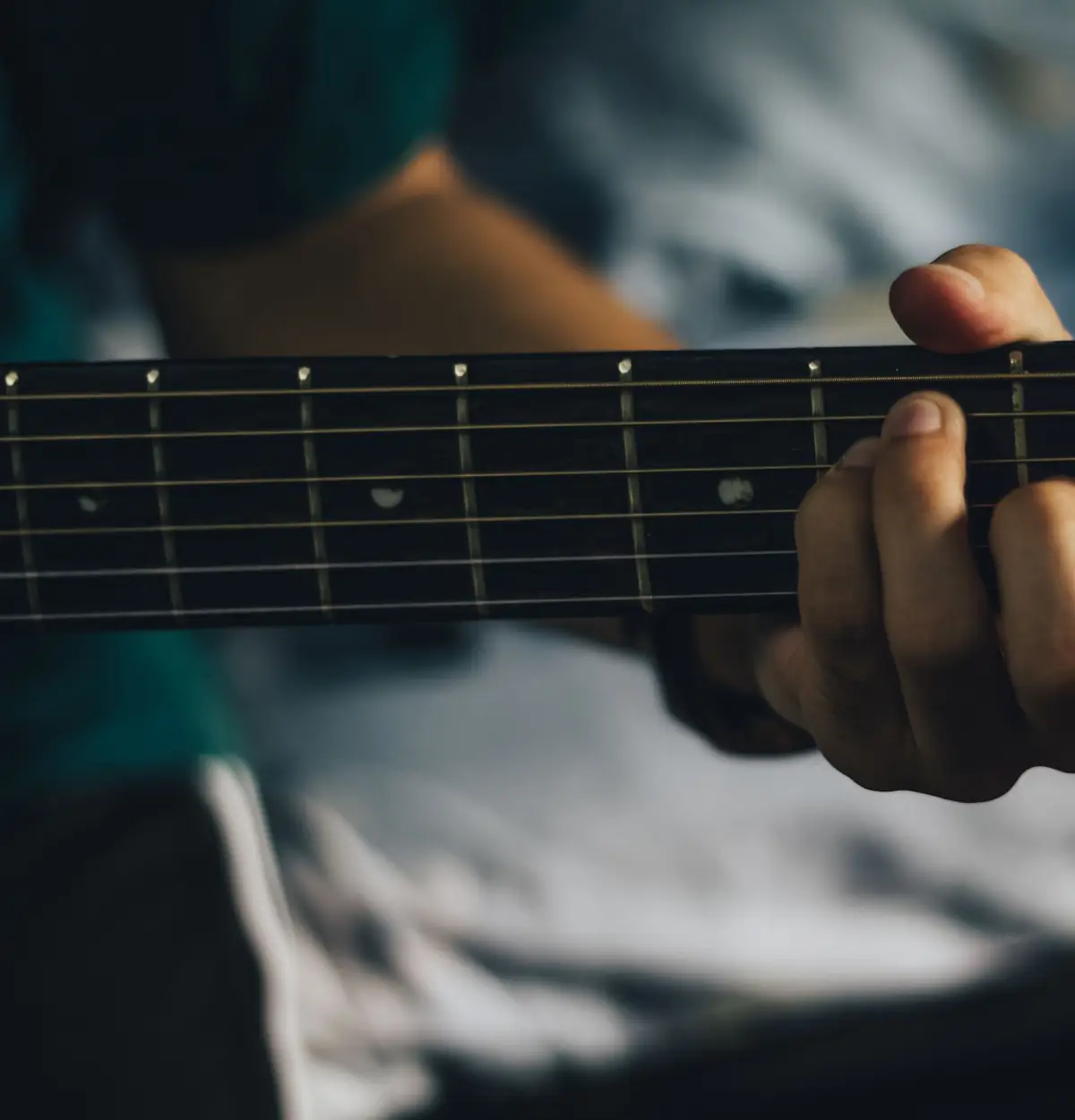
Where the body rests, where the fretting thumb sits, and how much pressure a fingertip needs. A lot of buzz is a thumb hooked over the neck or a finger lying flat instead of on its tip.
How to use a clip-on tuner or a phone tuner, what the string names are, and why a song sounds wrong even when the chords are right. Tuning is a skill, not a chore someone else always does for you.
A small set, usually starting with shapes such as E minor, G, C, D, or A, chosen because they show up together in songs. The goal is a recognizable chord, not a perfect one on day one.
Downstrums on a slow count, then a simple pattern that leaves space. Changing chords without stopping the arm is the skill that makes a song feel like a song.
One easy figure you can play from memory, so practice is not only chord drills. It might be four notes. That is enough.
Shape of a session
The opening minutes are setup: the guitar, the strap or foot position, and a tuner. If the instrument is hard to play because the action is very high, that gets named. Fighting a badly set-up guitar is not discipline.
The middle of the lesson is one chord and one motion, repeated slowly. You should leave knowing the difference between a muted string and a wrong finger. The last minutes are a practice task written in plain language, such as “two minutes of G to C, four times, slow enough to land each finger.”
There is no fixed eight-week syllabus on this website. The next lesson starts from what you could and could not do at home.
Preparation
Bring one if you own it. If you do not, say that in the inquiry. A loaner guitar is not promised.
They will be tender. Short practice sessions protect them better than one long night. Nails on the fretting hand should be short enough that the fingertip, not the nail, meets the string.
Name one song you would like to reach, even if it is too hard for week one. It tells the lesson which chords are worth learning first.
Many new players can sound a simple one- or two-chord pattern in the first lessons if they practice a little between sessions. A full song with several changes, steady strumming, and singing is later work. This page will not promise a number of weeks.
If your goal is acoustic campfire chords, continue with acoustic guitar lessons. If you want riffs and an amp, read the electric page before you buy gear. Adults with a tight schedule should also read adult guitar lessons.
Questions
Not before the inquiry. You do need access to a guitar for practice once lessons are underway. Say what you own, including nothing.
Start on the one you will pick up. Acoustic needs no amp. Electric often feels kinder on new fingertips and needs a small amp for the sound you expect. Neither choice blocks the other later.
Ten to twenty focused minutes is a solid early target. The task should be specific. “Play for an hour” without a target usually becomes wandering.
Only if it helps the music you want. Tabs, diagrams, and listening are enough to start.
No. Instruction on this site is one to one. See private guitar lessons for how that changes the pace.
Say whether you have a guitar and what you hope to play. That is enough for a useful reply.
Request a lesson